Showing posts with label expedition planning. Show all posts

Thursday, December 27, 2007

Expedition Planning #14 : Tomorrow is the day

The waiting is over. This is the last expedition planning post. Tomorrow at 5:45 am the expedition starts for real.

I shall post when I can, taking advantage of the email-to-blog feature used in this post. As I expect to have access only to text-based email, my posts may not be nicely formatted. Please bare with me. My colleague JJL has agreed to become a co-author on this blog and to fix the worst of the formatting during my absence.

I shall not be able to access the web much if at all, so expect me not to be up to date with what's going on in the blogging world. This also means I shall not be able to read your comments in real-time, though rest assured that I shall read and reply to them upon my return.

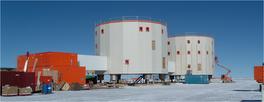
I have been looking forward to this expedition for so long! The expedition has two aims: continue work on the permanent seismic station at Concordia (code name CCD), and start the CASE-IPY experiment by deploying three prototype autonomous seismic stations. JY and I will be working flat out from the moment we set foot at Concordia in early January, in order to complete everything on our ambitious to-do list. Not so much, though that I won't be able to savor the experience of being in Antarctica, and share it with you all.

Best wishes to all for the up-coming New Year!

[Photo credit Philippe Noret - AirTeamimages]
-----
Keep up to date with the latest developments at http://sismordia.blogspot.com

Wednesday, December 26, 2007

Expedition Planning #13 : Astrolabe position update


D-Day minus one and a bit: the latest GPS readings have the Astrolabe at 250 nautical miles (290 miles or 560 km) from Hobart (see image above).

-----
Keep up to date with the latest developments at http://sismordia.blogspot.com

Tuesday, December 25, 2007

Expedition planning #12 : flight plans

The tickets have been purchased and sent to us, so there should be no further modifications to our departure date of December 28th (in two days' time).

Itinerary on the way out : Strasbourg - Paris - Hong Kong (16 hour layover) - Melbourne (6 hour layover)- Hobart. Itinerary on the way back : Hobart - Sydney - Hong Kong - Paris - Strasbourg (with no significant layovers anywhere).

Our expected arrival date back in Strasbourg is February 19th.

My next task: packing!

Saturday, December 22, 2007

Expedition Planning #11 : Astrolabe back on the move

Here is the latest position of the Astrolabe. As you an see, it has left Dumont d'Urville and is heading out to the open sea. In five days time it should reach Hobart.

Our departure date of December 28th has been confirmed. We set off on the 7am flight out of Strasbourg. Our route will take us to Paris, Hong Kong, Melbourne and Hobart, where we should arrive on December 30th.

Just a few more small things to take care of, and I'll be good to go.

-----
Keep up to date with the latest developments at http://sismordia.blogspot.com

Thursday, December 20, 2007

Expedition Planning #10 : departure postponed

As you can see from the picture, the Astrolabe is still at Dumont d'Urville. The latest information we have indicates it will set out again on December 23rd.

This means our departure has to be postponed. We'll be flying out on the 28th instead of the 26th. Good news for those celebrating Christmas with their families!


-----
Keep up to date with the latest developments at http://sismordia.blogspot.com

Saturday, December 15, 2007

Expedition planning #9b : Back update

Thanks to those of you who contacted me after my last post. After two days of not being able to sit down comfortably, by back is now on the mend. I will be taking extra care not to strain it again before we leave!

Our departure date of Dec 26th has been confirmed. We should be receiving our plane tickets next week.

Posting will be slow over the next few days as I am having an early Christmas reunion with my family. I'll be back soon...

-----
Keep up to date with the latest developments at http://sismordia.bogspot.com

Thursday, December 13, 2007

Expedition planning #9 : What not to do before setting out

If there is one thing I've been conscious of during the past few weeks of testing, packing and shipping equipment, it has been to take great care when lifting heavy objects. With the last of our cases shipped (all 200kg), was quite pleased with myself for not hurting my back by any incorrect lifting.

That is, until two days ago. We had run out of printer paper on my floor, so I went down to the paper-deposit room and stupidly reached over a pile of junk to pick up several boxes' worth... and strained my lower back... Doh!

Not the most intelligent thing in the world to be doing 12 days before departure...

-----
Keep up to date with the latest developments at http://sismordia.blogspot.com

Thursday, December 6, 2007

Expedition Planning #8 : The last of the equipment is configured

The past two days have been spent getting this funny-looking computer talking to two different machines, copies of the two acquisition systems currently running at the permanent seismic station at Concordia.

The function of this SeisComP computer is to obtain data in real time from recording systems connected to the two seismometers in the Concordia seismic vault, and to retransmit them in a standard format to any number of client machines. We shall install it at the station next month.

This machine is the last of the equipment that needed to be configured for our summer campaign. Yay!

-----
Keep up to date with the latest developments at http://sismordia.blogspot.com

Sunday, December 2, 2007

Expedition Planning #7 : The final countdown

D-Day (or departure day) as given by our marching orders is December 26th. While most of you will be sleeping off Christmas and settling in to a relaxing Boxing Day, JY and I will be making our way to Strasbourg airport at the crack of dawn to start our journey to Concordia.

What will we be doing in our last three weeks before departure? It's a classic case of "so much to do, so little time"... We have pared down the remaining tasks to the bare essentials. For me these are:

  • finish configuring the remaining equipment that we will take down there;
  • get an article I am writing with colleagues in the US to a point at which they can move it forward during my absence;
  • brief my colleague JJL (who is also PI on the CASE-IPY project that is taking me to Antarctica) on the current state of a masters project we are co-supervising;
  • get home for an early family Christmas (this also means finding time for early Christmas shopping);
  • buy essentials for the journey and pack my bags.

I would like to say I am calm, collected and efficient right now, and that all this will be done with no stress or panic. The reality is somewhat different. I seem to be going through phases of being entirely with it, calm and efficient, followed by phases in which I feel like I am going in circles and am incapable of doing anything right.

My advice to myself in these cases: breathe! And remember that a journey of a thousand miles starts with one step...

-----
Keep up to date with the latest developments at http://sismordia.blogspot.com

Thursday, October 18, 2007

Expedition planning #6 - The final touches

First of all, apologies to my regular readers for dropping out on you with no warning. It has been over a month since my last post, and the time has flown.

In this time I/we have:

  • sent a malfunctioning acquisition system back to the supplier for repair, which action engendered a comedy of errors with our not-to-be named, least favorite customs broker;
  • tested all hardware being sent to Antarctica every which way possible short of destruction testing;
  • designed, written, tested, debugged, re-designed, re-tested the software which should enable us to have access to the data from our temporary field stations with some regularity;
  • traveled to Rome and back to coordinate the summer and winter campaigns with the Italian colleagues with whom we run the Concordia seismic observatory, and with those who are trying to get their own funding for an International Polar Year experiment;
  • spent an evening on the ice at the local ice-rink as part of a nation-wide IPY-themed initiative, La Nuit des Chercheurs - Researchers' Night, during which we entertained skaters with our tales of Antarctica, and counted the number of their spectacular falls by recording them on our portable seismograph;
  • spent two days teaching the 2008 Concordia station chief, Jean-Francois Vanacker, all about the observatory station there, and what he needs to do to make sure it keeps running (he's a great guy, we're confident he will do an excellent job);
  • been to see: a radiologist for a chest X-ray and lung capacity test; a cardiologist for an electrocardiogram; my dentist to have a wisdom tooth pulled; an clinical analysis center to have a full suite of blood tests; the university doctor for a general checkup; all this so we can be certified fit enough to work in Antarctica;
  • spent one half day each chatting to kids, parents, teachers, and other generally interested punters at another outreach initiative, La FĂȘte de la Science - Science Fair, which was - in a fit of originality - also geared towards the International Polar Year;
  • packed nearly all our equipment first in sealed plastic wrap (to guard against humidity followed by Antarctic temperatures, the combination of which leads to things being frozen solid), then in aluminum cases for shipping out to Hobart by air-freight (no cardboard allowed, as freight has to be sprayed before entering Australian territory)...
... and much more that has slipped my mind for the time being, or maybe for good!

I will make no promises - for what good is a promise if I am forced to break it - but I shall try to post more regularly now the most time critical expedition planning is over, and I can breathe relatively freely once more.

-----
Keep up to date with the latest developments at http://sismordia.blogspot.com

Saturday, September 15, 2007

Expedition planning #5 : Marching Orders

It is now official: this Antarctic summer's expedition is on. We - my intrepid collaborator JY and I - received our marching orders last week.

They consist in a departure date (December 26th), a 40-page document containing information about our journey and about the two bases we will visit / sojourn at (Dumont d'Urville and Concordia), a list of clothing we will be issued with (some pretty cool warm stuff), and lots of medical forms for us and our doctors to fill in.

Next on our list - together with building / testing / fixing the equipment that must be shipped out by the end of the month - is getting doctors' and dentists' appointments to make sure we're physically good to go.

-----
Keep up to date with the latest developments at Sismordia - Seismology at Concordia

Sunday, August 26, 2007

Expedition planning #4 - Pinching pennies and time contraction

It has been a while since my last expedition planning post, a rant on the purchasing jigsaw. The reasons are that plans were up in the air for some time, as important variables kept changing. Now things have settled down enough for me to attempt to fill you in.

First off, funding: in a previous post, in which I enthused about the CASE-IPY project being selected for funding, I wrote that we did not as yet know what level that funding would take. We now know that we have been allocated 80% of what we asked for from the ANR (Agence Nationale de la Recherche).

We have been spending the last week or so trying to figure out how to get the project done with a 20% cut in budget. Never have I appreciated more the usefulness of spread-sheets. I had always been skeptical about their real place in science. In my opinion, complex math should be done by writing code, and data should be kept and analysed using proper databases. That left little space for the spreadsheet. However I have been forced to concede that OpenOfficeCalc is the tool of choice when it comes to dealing with budgets.

One week of turning the numbers all possible ways has led us to drop one proposed station out of the eight we were planning to purchase with the ANR money. This allowed us to reduce the logistical cost of the operation a little. We have also had to remove all IT equipment from the budget, as well as all publication costs. We will be walking on a tightrope for the next three years, but at least we can go out there and do this thing!

This summer's campaign is starting to come into focus a little more, now. We had already shipped a case-load of batteries out there, and at the beginning of August we shipped out insulated boxes of our own design, more space-filling insulation, insulation for cables, and of course the solar panels that will be our energy source for the duration of the Antarctic summer. We have shipped enough to set up three test stations. We will be monitoring their performance remotely, and will use the information we get back to improve the station design for the full deployment which will happen next year.

The dates for this summer campaign are now much closer to being confirmed as those I originally posted about. However, the 4 weeks of Concordia time we had asked for have been reduced to 3 weeks, for logistical reasons, so we will have to make more efficient use of our time up there.

Summary of the present situation: we've taken a 20% cut in funding and a 25% cut in field time, but we are still going strong.

-----
Keep up to date with the latest developments at http://sismordia.blogspot.com

Tuesday, July 10, 2007

Expedition planning #3 - The purchasing jigsaw

Seismic experiments require seismic stations, which don't exactly come cheap. You would think that once funding has been secured, the rest would be easy. Read on to find out how purchasing anything in a university context is like doing a jigsaw puzzle.

Once the funding is approved, it has to be made accessible, i.e. put into a university spending account which you can order from. At this stage, you often have to pre-decide how much of this money will be used for "investment" (i.e. for purchasing items which cost more than a certain amount and which have to be inventoried), and how much will be used for running costs. You had better get this part right, because university accountants will most likely refuse to change anything once it's been decided.

The next step is publishing a public Equipment Search, in which you state what it is you would like to purchase, and give the criteria on which you will judge offers made to you by the various companies which make or distribute the equipment you are searching for. Once the search is officially over, you must chose one of the competing bids, and justify your choice using the criteria you published in the search itself.

Then you can have a purchase order made out by the university. This requires the presence of a person qualified to draw up the order (this is not left to scientists - oh no!), and of the person who is responsible for the university account being used to make the purchase (which is often a senior scientist). Of course, the probability of both of these people being present at the same time (or at least soon after one another) is a function of the distribution of public holidays, and the of tendency of people to go on vacation. This latter factor is the most important one during the months of July and August.

Then, finally, you can send off the purchase order, arrange for shipping to a customs broker, and arrange for the customs broker to deliver when the university will be open again after the holidays. You hope, of course, that delivery will be made in time for you to test the equipment you have purchased before sending it on to the underside of the world for your crazy seismic experiment in Antarctica.

If you think this is more than enough to give you a head-ache, you are not alone! Maybe once I'll have done this a few more times it will all seem easier. For the moment, it's not fun at all...

[Image credits: Weston Boyd]
-----
Keep up to date with the latest developments at http://sismordia.blogspot.com
Wednesday, June 27, 2007

Expedition planning #2 - A ton of batteries.

Antarctica is a long way away from Europe, so equipment needs to be shipped a long time in advance. Especially heavy equipment that must travel by ship.

Although we ourselves will not be leaving for Antarctica until next December, we have already purchased and sent more than a ton of stuff (literally!):

  • 50 lead batteries - weight: 940kg - volume: 0,42 cubic meters
  • 6 galvanized steel masts + accessories - weight: 90kg - volume: 0.75 cubic meters
The batteries will be used to power our seismic stations during the Antarctic night (we should be able to keep recording for approximately two months after sun-down).

The masts are for radio-transmission of state-of-health information from our stations back to the Concordia base, so we can keep an eye on things.

-----
Keep up to date with the latest developments at http://sismordia.blogspot.com

Monday, June 18, 2007

Expedition planning #1 - Expedition dates set

Despite still not having any funding news yet, the plans for our Antarctic summer campaign are well underway.

There are not too many routes one could take to get to Antarctica. A lot depends on the polar institute that provides the logistical support. In our case, this is IPEV (Institut Paul Emile Victor), the French polar institute.

We will most likely be traveling on the French ice-capable ship, the Astrolabe. You can find details about the ship, as well as pictures and a video of the Astrolabe advancing through the pack on these IPEV web pages [in French].

We now have provisional dates for our expedition : 26 December 2007 - 20 February 2008. Nearly two months to get to Concordia, do some maintenance on the seismometer in the ice cave, set up our field experiment, test everything to death, and get back.

In my first post, I wrote about this experiment becoming more and more real as the planning advanced. Setting these provisional dates is another step towards making it all happen.

[Photo: See IPEV credits page]