Saturday, April 17, 2010

Successful Concordia summer campaign

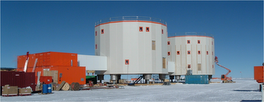
It has been over three months since I last posted here!! Field work simply got too exhausting for blogging, and since getting back from the field at the end of February, I've been running around trying to catch up with all the work that had been left behind.

Here is a short article (in French) we wrote for the IPEV website describing the deployment of the CASE-IPY Concordia-Vostok profile: Quatre nouvelles stations sismologiques au coeur de l'Antarctique

You can also download the Seismology at Concordia paper we wrote last year for the IPEV annual report.  The paper is in French, but it does have an English abstract:

Our understanding of earthquakes and the structure of the Earth derives from the analysis of ground motion recordings from a large number of networked seismic stations.  Mutual sharing of these records allows us to characterize earthquakes in detail, and also construct images of the interior of the Earth, called "tomographic images".  In order to obtain high quality images, seismic station coverage should be dense and homogeneous.  In the Southern hemisphere, the prevalence of oceans and the difficult access to land-masses lead to a deficit in coverage.  In the 1990s, there were only ten seismic stations in Antarctica, of which only one, South Pole, in the interior of the continent.  The "Seismology at Concordia" program aims primarily to establish a second "observatory-quality" continental station.  A second part of the project, present from the start and reinforced for the IPY, is the installation of autonomous stations for more local studies.

Thursday, January 7, 2010

No fly ...

The weather is always sunny and bright at Concordia, absolutely perfect for flying... unless of course you're counting on it.

Today we are grounded by bad visibility. The original plan was for the Twin Otter to first take fuel to Vostok for us to use on the flight back from our farthest station, then on the way back here test-land at our five sites in order to determine the snow conditions. Unfortunately, the weather has taken a turn to the worse over the whole region, and there is not enough visibility to land anywhere except a well prepared and marked runway. The pilots have given us the "No Fly"...

The forecast - such as it is on the Antarctic plateau - is not good: the current cloud cover is predicted to remain for the next three days, which corresponds exactly to our flying window. We can only hope for the forecast to be inaccurate, and for a bright sunny day to appear before the end of the weekend, or all the CASE-IPY deployment may be delayed until our second flying window sometime after the January 22nd.

While waiting for the sun to appear again, we are going ahead with the second part of our summer campaign protocol: calibrating the two seismometers currently in the Concordia seismic vault, and installing a third instrument there. We have already measured and cut the length of signal cable required (70m), and are in the process figuring out the pinouts of the various connectors.

As Leonardo Di Caprio says in the film "Blood Diamond" : "TIA!", which I've reworded to "This Is Antarctica!", or as we say in France : "C'est l'Antarctique!"...

Monday, January 4, 2010

Ready to fly !

Above is a photo of one of our CASE-IPY seismic stations (excluding the solar panels) packed and ready to fly. In order to estimate the fuel needed to fly out to the sites we have picked, we were asked a few days ago to weigh a complete station and all the material required to install it. The total comes to 435 kg!! Of this, 70 kg is made up of spares (an extra seismometer and acquisition system) and tools. The remaining 365 kg is the station itself, including 10 big batteries to see us part of the way through the winter.

Ouch! ... to think we shall be manhandling all this over the snow in the middle of nowhere at the end of the week... we should probably take a sled with us to help lug the heavier items... a couple of weight lifters would be appreciated too, but probably wouldn't fit in the Twin Otter... pity!

Sunday, January 3, 2010

Happy New Year !!

Happy New Year everyone !!

We've been busy people out here. First preparations for the New Year's feast, that ranged from lobster to snails to the traditional Italian "zampone e lenticchie". Then, on New Year's day, the arrival of the Raid, the convoy you can see in the photo above that comes 3 times every summer season to Concordia from Dumont d'Uvrille.

It takes the convoy 10 days to cover the 1100 km that separate us from the coast. It brings us most of the fuel, food, technical and scientific material needed to keep Concordia going for the whole year (a smaller amount of food and material comes in on semi-regular flights from either Dumont d'Urville or Mario Zucchelli bases).

As soon as the Raid arrives, Concordia transforms itself into a swarming ant-hill : its 80-odd ants (yes, this year we have reached a record : 84 people at Concordia!) unloading, transporting and reloading several tons of fuel and provisions... It would be utter chaos were it not almost second nature to the logistics people here, who keep the rest of us organized.

As I am hopeless at lifting and carrying stuff, I have posted myself in the kitchen for the past few days, in order to help our two overworked cooks, and one other volunteer, keep up with the extra "clients". Seriously tiring work, but the atmosphere is relaxed and enjoyable...

The CASE-IPY project is advancing well. We now have 4 out of 5 stations completely tested, and the first three stations are packed up and ready to fly. The indications we currently have say we should start flying on January 8th... fingers crossed!!

Sunday, December 27, 2009

CASE station results : good data!

It has taken a while to get my head around the data we brought back from the three prototype CASZE-IPY stations, including the time we took off to celebrate Christmas, but I now have some preliminary results regarding data quality: it is excellent!!

The picture shows an earthquake that occurred last November 24th, in the Tonga region, recorded on the CAS03 station. CAS03 did not suffer from the field error that resulted in stopping the acquisition of data from the two other stations. It continued to record until June 3rd, a full month into the Antarctic winter. As soon as the sun showed itself above the horizon (August 16th) it started to come alive again, but did not have enough power to stay awake more than the few minutes of direct sunlight. Its first day of continuous recording after the winter was September 10th.

We are very happy with this result! In all, we recorded 42 separate earthquakes of magnitude 6.3 and above on the CASE stations last year. Not all recordings are of this quality, but all in all, I'm pretty satisfied with the result. Another source of satisfaction is that none of the GPS units failed this year, and the timestamps are accurate. This validates our choice of installing the GPS units directly inside the boxes housing the acquisition systems, and confirms that there is indeed enough signal quality through a wooden box cover and 20 cm of snow to get an accurate time.

Work is continuing on the CASE-IPY stations for this year's deployment. We plan to have everything completely tested by Wednesday. On Thursday, the big strong guys of the seismo team, together with several volunteers, will go back to the site of CAS02 to dig out the cable we were forced to leave there last time.

We still have no confirmed date for our five deployment flights in the direction of Vostok, but plan to be fully good to go by the end of next weekend...

Wednesday, December 23, 2009

Tests of CASE-IPY stations

It is warm today : -30 degrees with little or no wind. A relief after the past few days...

The CASE-IPY experiment is proceeding nicely. Today we have started full-scale tests of the equipment we are to deploy. We have connected up the 3 solar panels, two regulators, ten batteries, an acquisition system (RefTek-130), a GPS receiver, and a seismometer. Everything but the seismometer and the solar panels lives in a big, insulated box. One of the challenges of the morning was remembering in what sequence to put things in the box...

My job this afternoon is to upgrade and properly configure the acquisition systems for all the stations. Given the problems we have had with the RefTeks when configuring them in the field, I am determined to pre-configure them and run all conceivable tests on them beforehand!

Monday, December 21, 2009

Recovery of CASE stations complete

This morning we went into the field with the Flexmobile again to recover the last of the three prototype CASE-IPY stations (CAS02). The team from the last expedition was augmented by two extra volunteers, so we could dig faster. We also took along a chainsaw, which proved to be very useful in cutting the compacted snow up into blocks.

At this station, the acquisition system refused to talk to me at all, and seemed dead. I have not ascertained the cause of this yet, nor if the system had worked at any time since the last summer campaign. I should know in a few day's time...

A warmer day would have been nice (it was windy, and the wind-chill temperature was -50 degrees Celsius), but we worked well, and extracted nearly all the instrumentation (including the STS-2 seismometer) from the station OK. We could not recover the older of the two seismometer cables, though, so shall have to go back for it another time.

Saturday, December 19, 2009

CASE recovery started

Yesterday we went on our first field mission of the summer campaign. The objective was to recover data and some of the instrumentation from two of the three prototype CASE-IPY stations deployed around Concordia (recovery from the third station is planned for Monday). We were supposed to take the PB100 we had just been certified for, but it broke down (what did I say about new material being reliable?), so we were assigned the older Flexmobile.

The first station (CAS01 for those in the know) was easy enough, though we had the unpleasant surprise of finding that the acquisition system was off, and looked like it had been all year. We had measured all the parameters, tested all the batteries, and removed all the material, including the radio antenna, in under 2 hours.

High in spirits, we motored over to the second station (CAS03). Here we found the batteries to be unnormally warm (above plus 30 degrees Celsius), we think because of a poor connection between one of the solar panels and the regulator. The acquisition system was recording, and seemed to have nearly finished its disk space. At this station, we were supposed to recover the seismometer, a CMG40 that was part of a faulty batch, and that needed to be sent back to the supplier. Digging the seismometer out was an hour's work for two of the team, while the other two dealt with disconnecting, testing and reconnecting the batteries. We were also supposed to recover the seismometer cable, and that is where the trouble began. The cable ran 10 meters or so from seismometer to acquisition box, under 1.5 meters of packed and hardened snow. It took the 4 of us 2.5 hours to dig it out, advancing no more than 20 cm at a time, using nothing more than shovels and a saw... grueling!

Scientists are stubborn creatures, and the four of us proved that yesterday, by not giving up until the whole cable was out. If there is one thing that we will have learned from this experience, it is don't bury your cables too deep!

The whole mission lasted 9 hours, all spent at -35 degrees Celsius, with a wind-chill factor of something like -45 degrees, except for the 1.5 hours round trip time. Needless to say we were exhausted last night, and have spent most of today recovering. Recovery of the third station, originally planned for this morning, was unanimously delayed to Monday.

Thursday, December 17, 2009

Driving lessons

High on the priority list of things to do for the CASE-IPY experiment is to recover the data from the second year of deployment of the CAS01, CAS02, CAS03 prototype stations. These stations are at 5 km from Concordia, and can be reached using a vehicle with caterpillar treads.

This year, the base has a new vehicle, the oddly named "Bully" or "PB100", shown in the photo below.

Wednesday, December 16, 2009

Solar panels and seismometers

Today was the first working day of the summer campaign. We spent most of it preparing the 15 solar panels we shall be installing at our 5 CASE-IPY stations. We also found time for playing with the new seismometers we shall deploy at these stations, the Trillium-120PA. They come with a special protective cover, which we have never used before, so we have had to adapt our procedures a little.

The first photo below shows the Trillium-120PA standing on the protective base; the second photo shows the complete protective cover.

Tuesday, December 15, 2009

Arrived at Concordia

Fuel drums in the middle of nowhere, and a hand-pump: all that is needed to keep a Twin Otter flying!

We left Hobart early this morning (by early, I mean 2:30 am!) under a star-studded sky, the last such sky we shall see in months. Orion was particularly low and bright, and seemed to be sending us on our way. The first leg of today's flying took us to Wilkins Airfield, near Casey station, in the AAD's A319 : a flight of pure comfort and luxury! We then had a few minutes to walk around on the ice runway, before being shepherded onto the Twin Otter that was to take us to Concordia.

About an hour into what was billed as a 4 1/2 hour flight, we were right back on the Antarctic coast. The winds had picked up, which meant we did not have enough fuel to get us to Concordia in one hop. We therefore took a detour via a fuel depo, the yellow and orange 200l drums of kerosene visible in the photograph. Three drums and a hand pump were all that were necessary to top up the Twin Otter. Five hours of noisy, cramped flying later, we swooped out of the sky onto the runway at Concordia, and were greeted by a large and friendly welcoming party.

So, Concordia at last! It hasn't changed a bit since last year. Many of the same people are here, and the atmosphere is friendly and festive. Today was dedicated to greeting old friends and getting settled. The real work will start tomorrow morning...

Monday, December 14, 2009

Flying to Casey

Just a quick post to keep you up to speed. We are now in Hobart, and
expect to depart for Casey station in the (very) early hours of
tomorrow morning. If all goes well, we shall have only a short wait at
the airfield near Casey, before boarding the Twin Otter that will take
us to Concordia. Everybody please keep your fingers crossed!

The four of us have met up with two more fellow Concordia people, one
of whom, Rosa, is going to be the station's doctor over winter.

Our stay in Hobart has been pleasant, though brief. This afternoon we
had a briefing at the Australian Antarctic Division (AAD) about their
flight protocols, safety procedures, and luggage requirements. At the
same time, we found out that three people's cold weather gear (the
stuff that is provided by IPEV) had not yet arrived from France. AAD
offered to issue us their gear instead, so Jean-Yves, Michel and I
will be wearing yellow Australian outfits instead of the traditional
blue French ones. Many thanks to the great guys at AAD for saving the
day!!

I shall be unable to post anything tomorrow. Next post from Concordia.

Saturday, December 12, 2009

Visiting the Buddha

Our planned visit to down-town Hong Kong never happened.  Instead of braving the smog and traffic down-town, we opted for a healthier and more cultural alternative.

A short bus ride, and a longer cable-car ride, away from Hong Kong airport is Ngong Ping, home to the Giant Buddha and the Po Lin monastery, and one of Hong Kong's three greatest Buddhist holy grounds.  It was inspiring to climb the several hundred steps up to the Buddha (the world's tallest, seated outdoor bronze Buddha statue), and extremely refreshing to stroll through the lush vegetation covering the surrounding hills.


We are now back in the airport, resting and waiting for the flight to Sydney.  Despite our best efforts, jet-lag and travel-tiredness are beginning to get the better of us, and we are all  collapsed in separate heaps on the comfortable armchairs of the Cathay Pacific lounge.

Two dawns in one day

The first major leg of the trip is over.  The four of us now are resting a while in a lounge in Hong Kong airport, before heading to down town Hong Kong to pass the day.  The facilities here are excellent, as always, with free wifi, food and drinks. 

Below are two photos taken in the past 24 hours : the first was taken at dawn shortly after take-off from Strasbourg, and the second at dawn shortly before landing in Hong Kong.


Two dawns in one day.  Not bad when you think that in a few days time we shall be in eternal sunshine: no sunrises or sunsets for nearly two months!

Friday, December 11, 2009

And we're off!


Having met up with two fellow Antarctic travellers, we are now sitting in Charles de Gaulle airport in Paris with an hour to kill before boarding our Hong Kong flight.

Our departure from Strasbourg this morning was smooth enough, after we fixed a small problem in our reservations. The ball is now rolling: by when it stops, we shall be half a world away.

This is the waiting phase of the mission: waiting for check-ins waiting for security, waiting for departure... With six flights before we arrive at Concordia, it's a game we shall be playing often! Good job we're pretty good at it!


--- Blogged on the go!

Tuesday, December 8, 2009

What does one take to Antarctica?


I often get asked what goes in my suitcase when packing for Antarctica. Most people expect me take winter gear, thermal underwear, heavy sweaters, gloves.

In reality, the first things that go into the "to pack" pile are bits of scientific equippement that were left out of the boxes shipped to Concordia for the experiment. This year I'm taking 20 odd items, ranging from connectors and calibration boxes for seismometers, to snow scrapers. My colleague Jean-Yves is taking a similar volume of equippement. Between us we hope to minimize those embarassing "drat! we forgot to bring xyz!" moments.

In the space that's left in our bags, we pack the bare necessities of life away from civilization: toothbrush, moisturizer (the dryness and coldness of the air at DomeC cause the skin on your hands to crack open most painfully if you don't apply moisturizer regularly), everyday clothes for living in the base, and a swimsuit.

All the cold-weather gear is provided for us by IPEV, the French polar institute. We are each issued with two voluminous bags containing heavy socks, hats, gloves, work jeans, sweaters, sleeping bag, thick-soled boots, an insulated parka for outdoor work, sun goggles and, yes... thermal underwear!

Hmm, it's Tuesday morning, and my flight leaves on Friday... maybe I should start to pack soon!

Sunday, December 6, 2009

Pre-departure party


It's now officially the last week before departure, and things are getting a little crazy: so much to do, so little time!

I have been spending most evenings in the past week or so seeing friends, wishing everyone a happy holiday season, and generally being sociable.

The week culminated last night in a drinks and dinner party at my place, in which dinner consisted entirely of home-made finger-food. Everyone pitched in, bringing both culinary and artistic talents into play, which made for a very successful evening.


I am sorry to be leaving (albeit temporarily), and yet also looking forward to it. There will be many people at Concordia I have got to know during the last two summers, and who I shall be very happy to see again. From a work perspective, after three years of preparation, we are finally ready to go from prototype installations to the real thing: daunting, yes, but exciting all the same!

Friday, December 4, 2009

Summer is one week away

An odd title for the first week of December, maybe, but not a false one. In one week's time I start out for my third Antarctic summer campaign.

Destination: Concordia, via Paris, Hong Kong, Sydney, Hobart, and Casey.

We have great expectations for the campaign, including (finally!) the deployment of the CASE-IPY stations along a 700km long profile between Concordia and Vostok (the Russian base, next to the sub-glacial lake of the same name).

There will be much work to do during the next two and a half months, and many glorious sights. I shall do my best to keep you up to date, with stories and images from the field.

And now... back to my desk, for the campain preparation is far from over...


Sunday, April 26, 2009

Two conversations of interest to polar seismology...

During the afternoon of the last day of the European Geophysical Union meeting in Vienna, I had two very interesting conversations, one with a member of the IRIS-PASSCAL polar team, and the other with a friendly glaciologist I knew from Concordia.

The polar team at IRIS-PASSCAL have done all the development and part of the deployment of the American experiments in Antarctica for the International Polar Year. Their station designs are first rate, and their success rate for last season makes me envious (23 out of 24 stations deployed worked perfectly, sending state of health data over satellite links). We exchanged design details, and did some troubleshooting for some of the instruments at Concordia. One very interesting, motivating and helpful conversation!

Just afterwards, I bumped into a glaciologist from LGGE in Grenoble, who I met for the first time at Concordia, two years ago. We got talking about the ice structure around Dome C (quite a lot is known thanks to the EPICA ice core), and how it may influence the seismic data we record up there. He gave me a good overview of how compaction works, and suggested some people who might know more about the mechanical properties of the various ice layers, their density and possibly their wavespeeds. This might help us figure out how to correct for the ice-signal on or recorded seismograms.

Just an example of how putting a bunch of scientists and technical people in a conference center together can turn out to be hugely profitable, often in unpredictable ways.

Monday, April 20, 2009

Earth's core less anisotropic than we thought?

One of the reasons for installing seismic stations in Antarctica is to improve our knowledge of the Earth's inner core. It would seem - from the data currently available - that seismic waves that propagate through the inner core parallel to the Earth's rotation axis (polar paths) are faster than those that propagate perpendicular to the Earth's rotation axis (equatorial paths). This speed difference implies the inner core is anisotropic, with a N-S fast axis.

This conclusion is based on a large number of equatorial paths, and only a small number of polar paths, most of which come from earthquakes in one particular region (South Sandwich islands) recorded in Alaska. Data from new stations in Antarctica are expected to increase the number of polar paths available, and improve our understanding of the inner core.

At EGU this morning, I heard one of the first talks on the inner core that actually uses data from newly deployed Antarctic stations:

D. Leykam, H. Tkalčić, and A.M. Reading : Core structure reexamined using new teleseismic data recorded in Antarctica: Evidence for, at most, weak cylindrical seismic anisotropy in the inner core (Abstract).

The data are from the SSCUA stations, deployed near Mawson station. The PKP(bc-df) measurements made on these data are all between 0 and 2 seconds, and imply that if there is N-S oriented anisotropy in the inner core, this anisotropy must be weak (and specifically, much weaker than implied by the South Sandwich data). Indeed, the weak anisotropy hypothesis seems to be consistent with all data except those from South Sandwich.

Should we therefore dismiss anisotropy in the inner core? Possibly. But before doing so we need more data and measurements from other Antarctic stations (the CASE-IPY and Concordia stations will contribute some of these data), and we need to understand why the PKP(bc-df) measurements from South Sandwich events are so large.